Domain-specific by design
Each agent is a small, complete agent: its own instructions, its own memory, and the precise tools it needs to do its job. Nothing more. It knows one domain inside and out.
An impressive prototype is easy. Agents your team can trust with real customers, real data, and real consequences are hard. That gap between a clever demo and a scalable system is exactly where our strategy, design, and engineering disciplines converge.
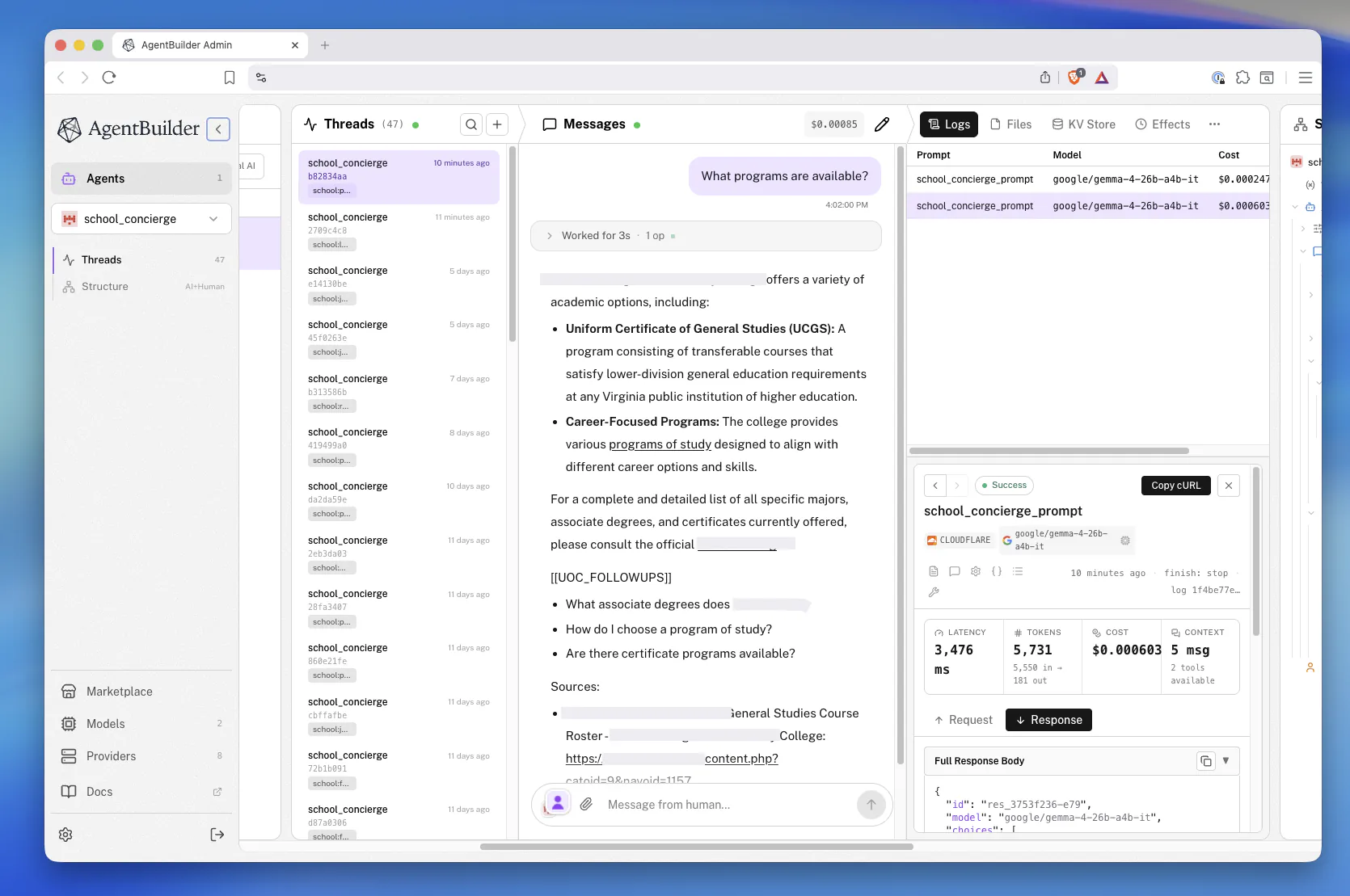
We start with why: the workflow you’re trying to change, the cost savings of automation, and how product owners can stay informed of agent decisions. Then we engineer custom domain-specific AI agents around it: small, complete agents with precise tools, strict capability limits, and the telemetry to show exactly what happened on every step of every turn, so there's never any confusion about why agents are making the choices they make.
We’re a Charlottesville-based team that travels the United States speaking, demoing, and implementing custom domain-specific AI agents for businesses. We have shipped production software for higher-education, government, and venture-backed startups for over a decade.
What are Domain-Specific Agents?
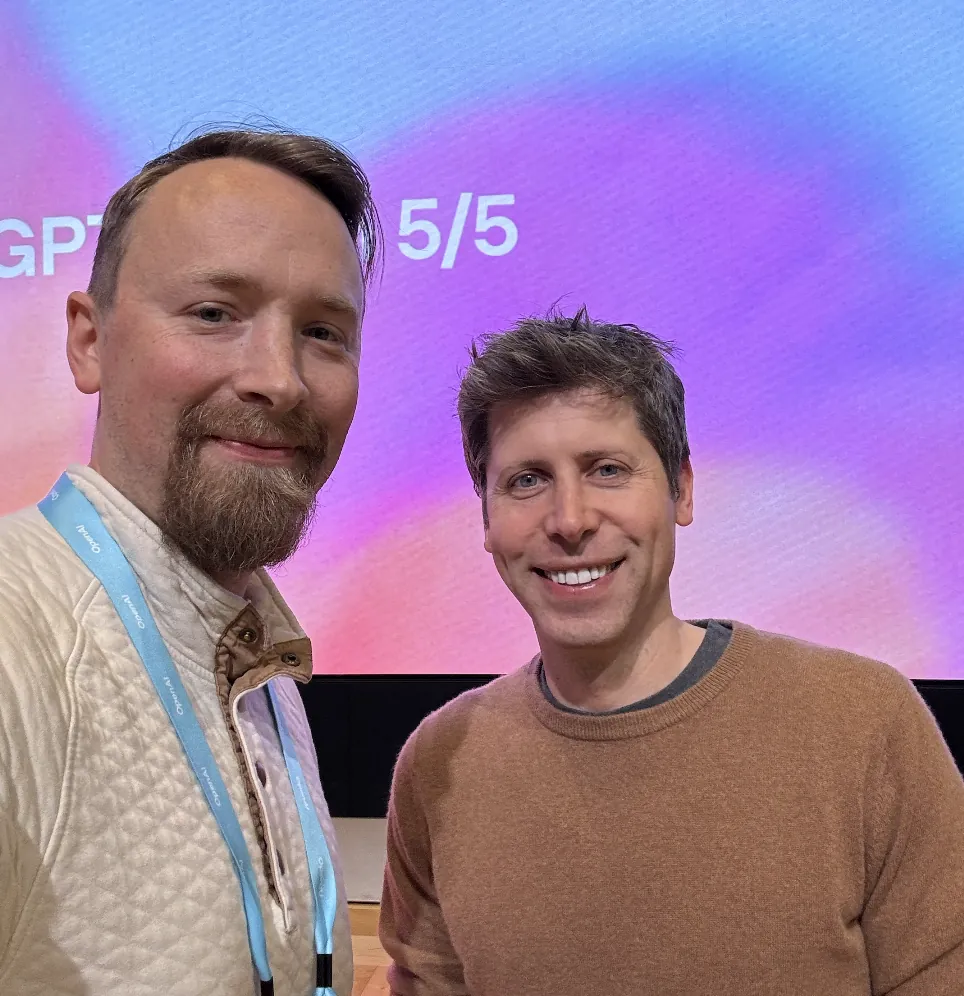
Everybody is trying to build their own custom agents, and most of them stall, because piling more tools and more context onto one giant assistant eventually breaks down. The answer is composition: small, focused agents, each an expert in one domain, working together the way a real team does. That’s how we build, and Braid co-founder Justin Schroeder made the case at the AI Engineer World’s Fair.
Each agent is a small, complete agent: its own instructions, its own memory, and the precise tools it needs to do its job. Nothing more. It knows one domain inside and out.
We didn’t get to the moon by handing one person every tool. We got there with teams of experts, each one very good at a narrow job. Agents work the same way: small specialists with a coordinator above them, handing work to one another in plain English.
Businesses want their data properly integrated into AI. That is the whole reason custom agents exist. So we build agents that know your CRM, your documents, and your internal tools inside and out, with the right credentials and nothing beyond them.
A big general-purpose agent can do anything, so people end up using it for everything, bypassing permissions along the way. We scope every agent on purpose: its own sandbox, its own file system and code execution, and only the capabilities you’ve explicitly approved.
You can’t put the biggest model in front of your customers. It’s too expensive. Give a small, inexpensive model a minimal context and a carefully picked set of tasks, and it executes them faithfully, at a cost that works.
Building robust agents is hard. You need durable execution so a fault doesn’t kill the job, telemetry that shows exactly what happened on every step of every turn, and infrastructure that runs potentially hundreds of user conversations in parallel. Our framework for building domain-specific AI agents provides all of this and more.
The hard part of custom domain-specific AI agents is not the prompts. Anybody can write a prompt. The hard part is orchestrating the agentic loop, picking back up when something faults, knowing exactly what every agent did on every turn, and keeping every context small enough to stay fast, affordable, and predictable. That is software engineering, and it has been our discipline for over a decade.
Serving Charlottesville, Central Virginia, Richmond, and the greater Washington, D.C. area, Braid partners with organizations that need AI that scales affordably in production, with real customers and real data.